
Paint Calculator: How Much Paint Do I Need?
Estimate how much paint you need for room walls and ceilings. Enter dimensions, openings and coats, then use the coverage on your paint label. The starting value of 350 square feet per gallon is a planning assumption, not a promise of coverage. Primer, trim and doors painted separately need their own quantities.
Room paint calculator
Use the product label's coverage for your surface. The lower end of a range is a conservative planning choice.
Paintable surface
334 sq ft
Paint needed
1.9 gal
Buy
2 gallons
Uses your label coverage, subtracts an estimated 20 sq ft per door and 15 sq ft per window, and rounds up to whole gallons. Actual openings and usage vary. Buy primer separately; rounding does not guarantee a touch-up allowance.
How many square feet does a gallon of paint cover?
Manufacturer ratings assume smooth, primed, previously painted surfaces. Here is what a gallon really covers, by surface.
| Surface | Coverage per gallon |
|---|---|
| Smooth, previously painted drywall | 350–400 sq ft |
| New drywall (primed) | 300–350 sq ft |
| Lightly textured / orange peel | 300–325 sq ft |
| Knockdown or heavy texture | 250–300 sq ft |
| Popcorn ceiling | 200–250 sq ft |
| Bare or rough wood siding | 200–250 sq ft |
| Stucco / masonry | 150–200 sq ft |
| Primer on drywall | 300–400 sq ft |
How long to wait between coats of paint
Recoat too early and the roller drags the first coat off the wall. These are the times we work to, at roughly 70°F and 50% humidity.
| Product | Dry to touch | Recoat after |
|---|---|---|
| Latex / acrylic wall paint (Cashmere, Regal) | 1 hour | 4 hours |
| Premium acrylic (Emerald, Aura) | 1 hour | 4 hours |
| Waterborne alkyd trim enamel | 4–6 hours | 16–24 hours |
| Oil-based enamel | 6–8 hours | 24 hours |
| Ceiling flat | 30 min | 2 hours |
| Exterior acrylic (Duration, Emerald Exterior) | 1 hour | 4 hours (above 50°F) |
Cold or damp conditions stretch every number. In an unheated Minnesota garage or a basement in July, double the recoat window and keep air moving. Full cure is when the finish reaches its final hardness — wait that long before scrubbing walls or setting anything heavy against fresh trim.
The math behind the calculator
1. Wall area = 2 × (length + width) × ceiling height.
2. Subtract openings — about 20 sq ft per standard door and 15 sq ft per window.
3. Add the ceiling if you are painting it: length × width.
4. Multiply by coats, then divide by your label coverage (350 sq ft per gallon by default).
5. Round up to the next whole gallon and keep the remainder for touch-ups.
Worked example: a 12 × 12 room with 8-foot ceilings, one door and two windows has 384 sq ft of wall minus 50 sq ft of openings = 334 sq ft. Two coats is 668 sq ft, divided by 350 = 1.9 gallons, so buy 2.
Paint quantity FAQs
How much paint do I need for a room?
Measure the perimeter of the room, multiply by the ceiling height, then subtract about 20 sq ft for each door and 15 sq ft for each window. Divide that number by 350 to get gallons per coat, and multiply by the number of coats. A typical 12×12 room with 8-foot ceilings needs about 1.9 gallons for two coats of wall paint with one door and two windows — the calculator on this page does all of it for you.
How many square feet does a gallon of paint cover?
About 350–400 sq ft per gallon on smooth, previously painted drywall. Texture, porosity, and color changes cut that down: knockdown texture drops it to 250–300 sq ft, popcorn ceilings to 200–250, and stucco to 150–200. We calculate with 350 sq ft per gallon so you are not driving back to the store.
How long should I wait between coats of paint?
Four hours for most latex wall paints, and a full 16–24 hours for waterborne alkyd or oil-based trim enamel. Recoating too soon lifts the first coat and leaves roller marks that will not sand out. In a humid Minnesota basement or a bathroom, add a couple of hours and run a fan.
How many coats of paint do I need?
Two coats for almost every repaint. One coat only works when you are refreshing the exact same color on a clean, smooth wall. Going from dark to light, covering water stains, or painting new drywall means primer plus two finish coats — three layers total.
Should I add extra for touch-ups?
Yes. Keep about a quart left over per color for nail holes and scuffs down the road. Our calculator rounds up to the next whole gallon, which usually leaves you the right amount.
Does paint color affect how much I need?
Deep reds, bright yellows, and strong blues use less pigment-blocking base and often need a third coat or a gray-tinted primer underneath. Plan on one extra coat for any saturated accent color.
Does primer count as a coat?
For coverage math, yes — buy primer separately and calculate it the same way. For appearance, no: primer is not a finish, and one coat of color over primer will look thin under Minnesota window light.
Planning paint for a Twin Cities room refresh
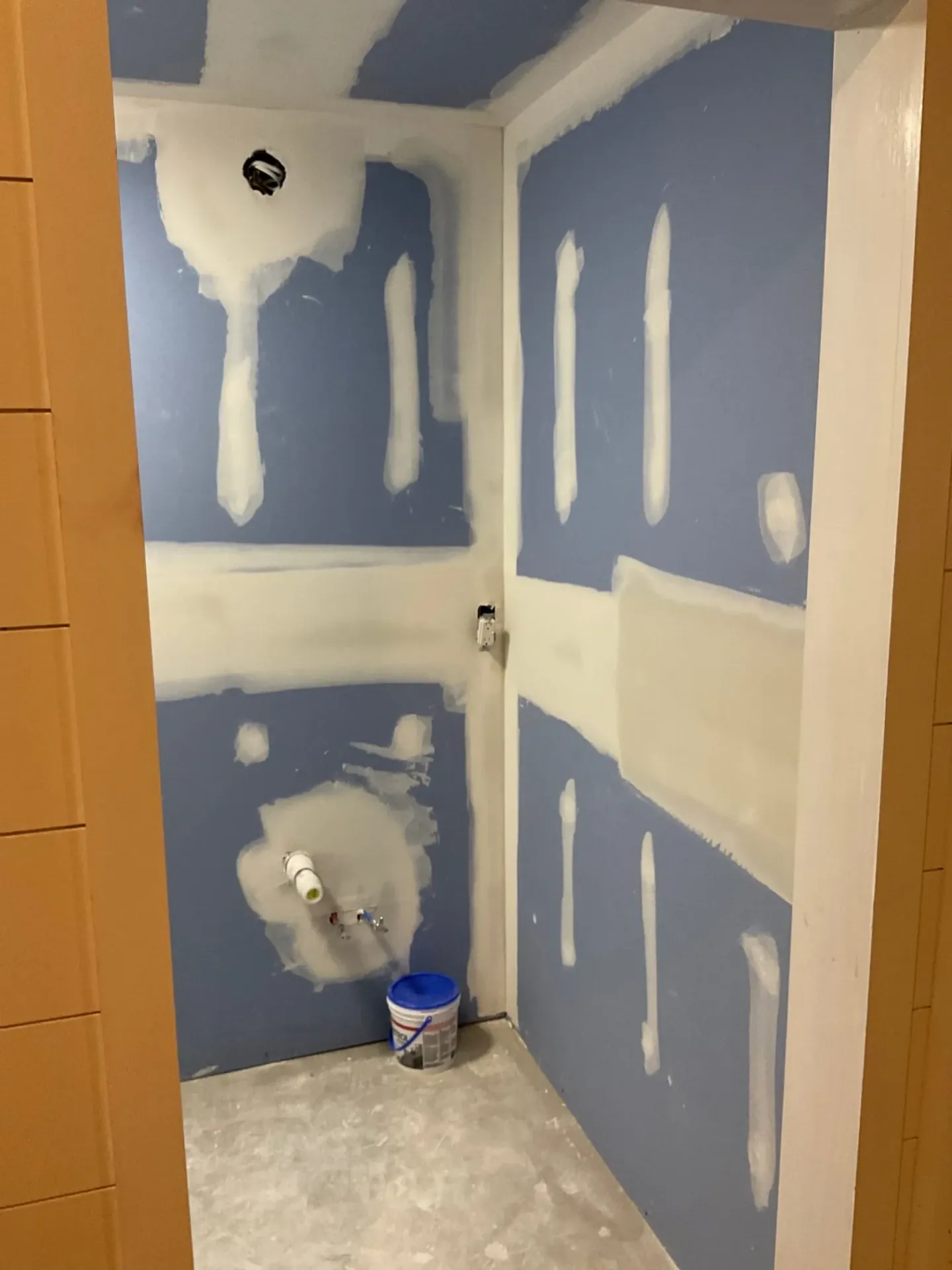
Fresh drywall, repaired seams and textured surfaces can absorb paint differently. Measure finished surfaces and confirm the primer and paint system before buying materials.
For preparation, see our wallpaper removal and texture matching guide. For the complete project, explore interior painting in the Twin Cities.
Visit our Shoreview neighborhood and project page, or find your community on Service Areas.
Skip the math — we'll handle the whole thing
Owner-operated. Cody estimates every project, is on site for the work, and completes the final walkthrough — including whole-home and commercial projects. Never subcontracted. Request a free written estimate.