
Horizontal Hairline Crack in a Wall: What It Means and How to Fix It
A thin crack running straight across your wall about four feet off the floor is almost always a drywall tape seam that let go — not your foundation. Here is how to tell the harmless cracks from the ones worth worrying about, and the repair that actually holds through a Minnesota winter.
Identify your crack
Where a crack runs tells you what caused it. Find yours below.
Horizontal hairline crack across a wall
Cause: Almost always a taped drywall seam that let go. Sheets are hung horizontally, so the seam sits 4 feet off the floor and runs the length of the wall. Minnesota's humidity swing — dry, heated winters and humid summers — cycles the framing and cracks the paper tape at that joint.
Serious? Usually not structural. Watch it if the crack is wider than 1/8 inch, has a lip where one side sits proud of the other, or reappears within a season of repair.
Cracks radiating from a door or window corner
Cause: Stress concentration. The opening interrupts the framing, and normal seasonal movement releases at the weakest point — the corner of the drywall sheet.
Serious? Common and cosmetic in most homes. If the door itself starts sticking or the crack keeps widening, have the framing looked at first.
Vertical crack in the middle of a wall
Cause: A butt joint between two sheets, or shrinkage in new lumber during the first two heating seasons of a new build or addition.
Serious? Cosmetic. New construction in Minnesota commonly cracks through the first winter as framing dries out.
Ceiling cracks and nail pops
Cause: Truss uplift — the classic Minnesota problem. Attic trusses arch upward in a cold, dry winter and settle back in summer, cracking the ceiling-to-wall joint season after season.
Serious? Cosmetic but recurring. The fix is a flexible crown or a floating corner detail, not more mud.
Stair-step cracks in a basement wall
Cause: Foundation movement, not drywall. Cracks that follow the block or brick pattern point to settlement or lateral soil pressure.
Serious? Get a structural engineer or foundation contractor before any cosmetic repair. Patching hides the evidence you need.
Crack with brown staining or a soft edge
Cause: Water. A roof leak, ice dam, plumbing drip, or bath fan venting into the attic.
Serious? Fix the source first. Painting over a wet stain traps moisture and the patch fails within months.
When a crack is not just cosmetic
- Wider than 1/8 inch, or wide at one end and tapering at the other
- One side of the crack sits proud of the other — you can feel a lip
- Diagonal stair-step cracking in a block or brick basement wall
- Doors or windows near the crack begin sticking or won't latch
- The crack grows noticeably over a few weeks, not a few seasons
- Brown staining, soft drywall, or a musty smell — water first, patch second
Any of these calls for a structural engineer or a foundation contractor before cosmetic work. We will tell you straight if that is what we see — we'd rather lose the patch job than cover up something that matters.
How to repair a drywall crack so it stays fixed
Six steps. Skipping steps 2 and 5 is why most cracks come back.
Open the crack
Run a utility knife or 5-in-1 tool down the crack to remove loose tape and crumbling mud, then vacuum the dust. A patch over a loose edge cracks again in one season.
Re-tape the joint
Bed paper tape or self-adhesive mesh in a thin layer of setting compound. For a horizontal seam crack, tape the full length — spot-patching just moves the crack a few inches.
Build up thin coats
Two or three coats of joint compound, each feathered wider than the last — about 8 inches, then 12, then 16. Thin coats dry flat; one thick coat shrinks and cracks.
Sand and match texture
Sand with 150-grit on a pole sander, then match the surrounding texture. Orange peel and knockdown need a spray can or hopper; smooth walls just need a light sanding.
Prime the patch
Joint compound is far more porous than paint. Unprimed patches flash — you see every repair as a dull halo once the wall dries. Primer over every patch, always.
Paint wall to wall
Paint the full wall corner to corner, not just the patch. Even the same can of paint from two years ago will not blend into aged, faded paint.
Recent drywall projects
Real taping, finishing and installation work from Twin Cities homes.
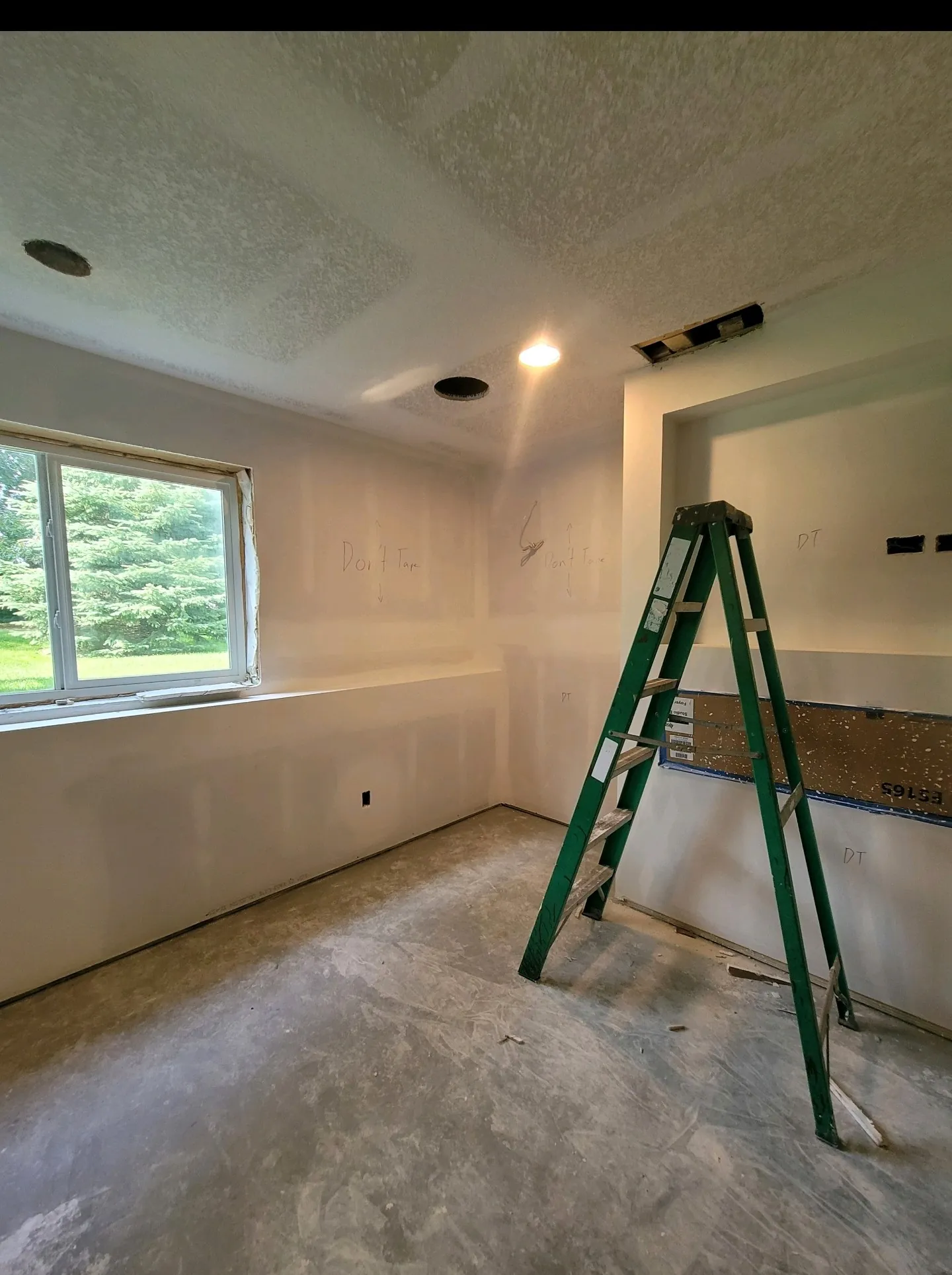
Taping & 3-coat finish
Fridley, MN
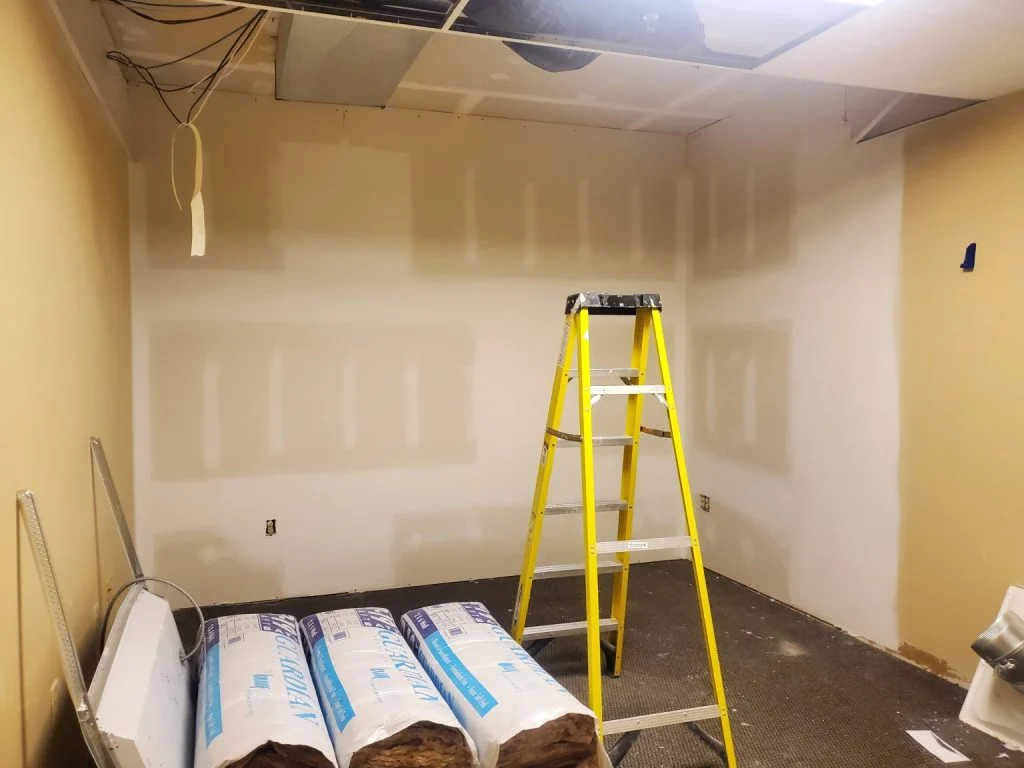
Basement drywall prep
Vadnais Heights, MN
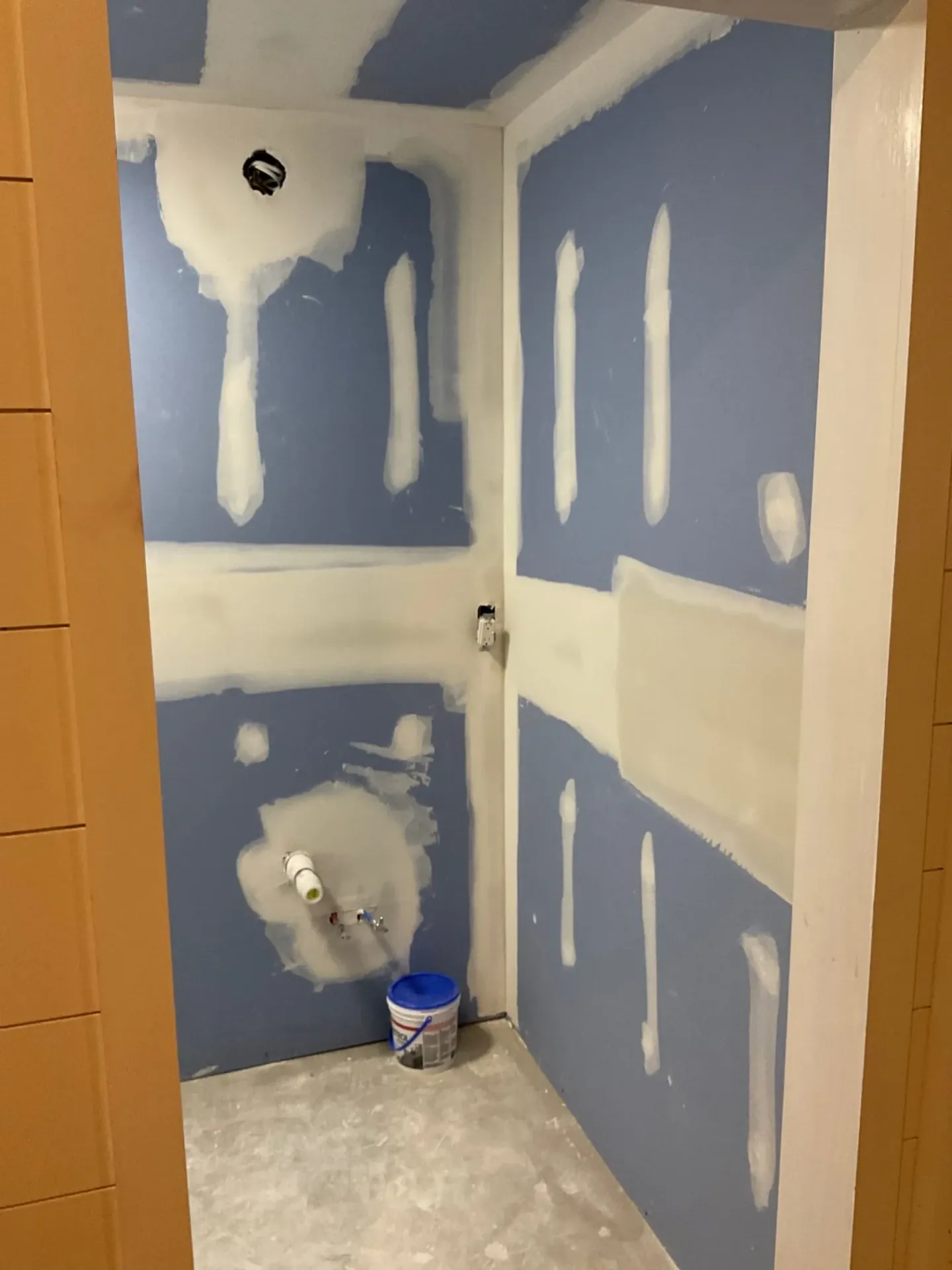
Bathroom drywall installation
Shoreview, MN
Twin Cities drywall crack repair cost
2026 pricing, including patching, texture matching, primer, and cleanup.
| Repair | Low | High |
|---|---|---|
| Single hairline crack, patch + prime | $150 | $300 |
| Full horizontal seam re-tape (one wall) | $300 | $650 |
| Multiple cracks, one room + repaint | $650 | $1,400 |
| Ceiling crack from truss uplift | $400 | $900 |
| Water-damaged drywall section replaced | $450 | $1,200 |
| Whole-home crack repair before repaint | $900 | $2,500 |
Repairs done as part of a full room or whole-home repaint cost less, because prep and setup are already in the job.
Related guides
Drywall repair services
Holes, water damage, texture matching and full sheet replacement across the Twin Cities.
Paint calculator
How much paint you need to repaint the wall once the patch is primed.
House painting cost guide
What a full interior or exterior repaint costs in Minneapolis and St. Paul.
Drywall crack FAQs
What causes a horizontal hairline crack in a wall?
In nearly every case it is a failed drywall tape seam. Drywall sheets are hung horizontally, so the joint sits about 4 feet up and runs the length of the wall. Minnesota's dry heated winters and humid summers move the framing behind it, and the paper tape at that seam eventually cracks. It is cosmetic unless the crack is wider than 1/8 inch or one side sits higher than the other.
Is a hairline crack in a wall serious?
Usually not. Hairline cracks at drywall seams and door corners are normal seasonal movement. Take it seriously when the crack is wider than 1/8 inch, when the two sides are no longer flush, when it keeps growing, when doors or windows start sticking, or when the crack steps diagonally through a basement foundation wall. Those point to structural movement and should be looked at before any patching.
Can I just use caulk or spackle on a drywall crack?
Caulk flexes but will not hold paint flat on a wall, and lightweight spackle over a moving seam cracks again within a season. The lasting repair is to open the crack, re-tape the joint, feather two or three coats of joint compound, then prime and paint.
Why does the same crack keep coming back?
Because the tape underneath was never replaced. Skimming compound over a failed seam covers it for a few months, then the joint moves again. A repair that includes new tape bedded in setting compound holds. Recurring ceiling cracks in a Twin Cities home are usually truss uplift, which needs a flexible corner detail rather than more mud.
How much does drywall crack repair cost in the Twin Cities?
A single hairline crack patched and primed runs $150–$300. Re-taping a full horizontal seam on one wall is $300–$650. Repairing several cracks and repainting the room typically lands $650–$1,400. Whole-home crack repair before an interior repaint is $900–$2,500.
Do I need to prime a drywall patch before painting?
Yes. Joint compound absorbs far more paint than the wall around it, so an unprimed patch shows as a dull spot through the finish coat — painters call it flashing. A quick coat of drywall primer over each patch prevents it.
Should I repair cracks before selling my house?
It is one of the cheapest things you can do before listing. Buyers read wall cracks as foundation problems even when they are ordinary seam failures, and inspectors note them. A few hundred dollars of patching and a repaint removes the question entirely.
Cracks fixed right, then painted to match
Send a photo of the crack and we'll tell you what caused it and what it takes to fix — free, in 24 hours. Owner-operated, fully insured, 3-year warranty.